Wednesday, 12 October 2011

photos

I would like to have more photos on here, but have got behind, so as a first tranche, here are photos relating to Monday this week (removing cast, x-ray, casting).

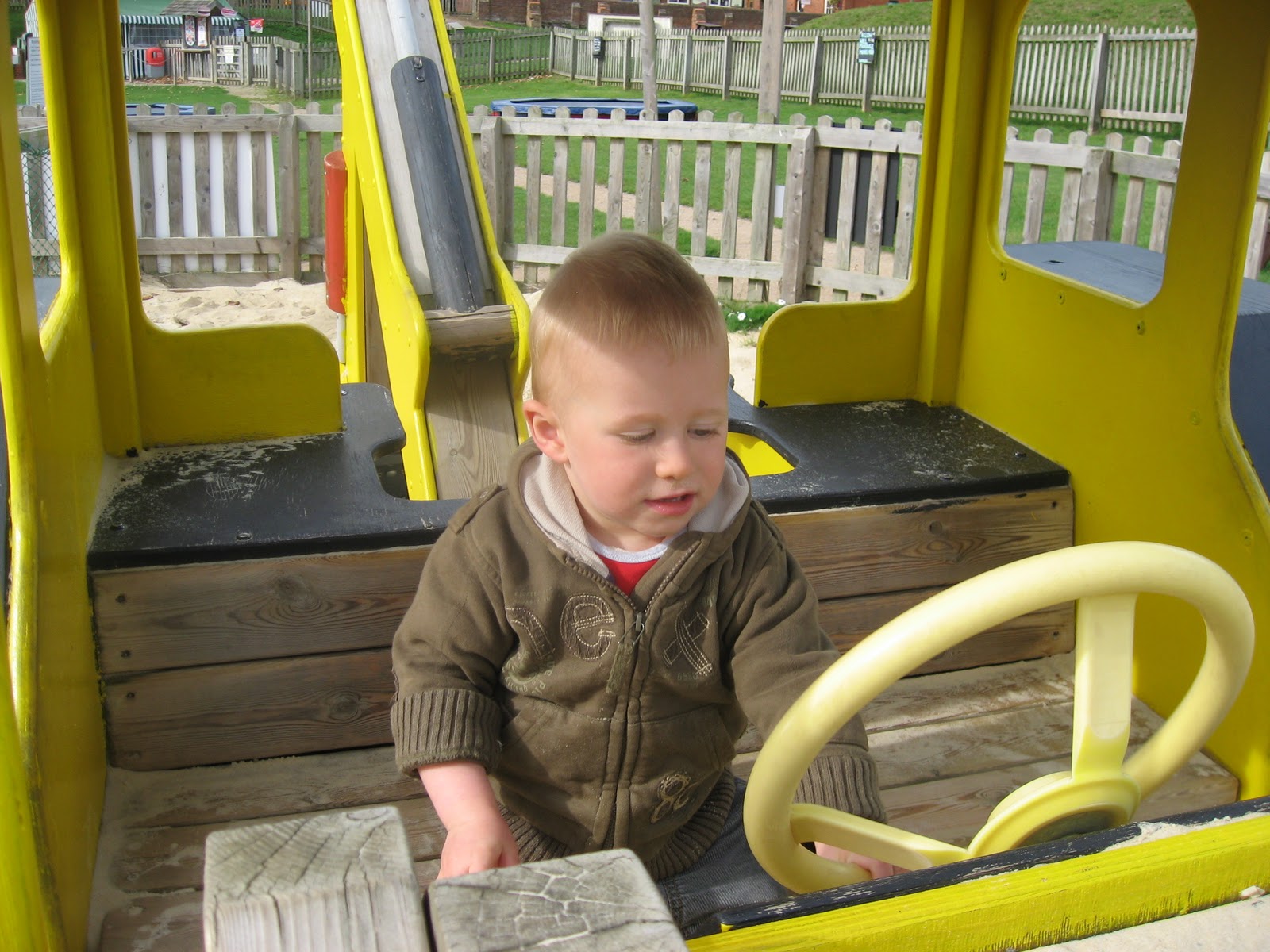
We went to Hatton Country World on Sunday - we have annual membership, so go a lot, but J is never usually allowed in the sand. Since I knew he'd have the cast removed later, we took full advantage of the sand and diggers.
 

"No I'm not wearing that silly hat - you wear it mummy" (he was quite happy for me to put it on...)


Can you see the lump in the middle of J's back below? The consultant said it didn't show up on the x-ray, so wasn't bothered- but there is now a lump where the cast was rubbing a couple of casts ago :-(


Monday - and we started off in x-ray. No photos of the actual x-ray (with J standing) but these are ones with us looking at the equipment. To a small boy who loves wires, tubes and machines, it's great :-) 

 In the ward 11 waiting room. J spent ages putting the people and turkey in the trailer in different combinations, clearly working out what fitted best.

 Late afternoon, time for the casting - despite J being very, very tired.


 Oh dear - not a happy bunny.


 J LOVES my hair and finds it very comforting. Not always the most comfortable for me - but given the circumstances, it was good to find something that soothed him.


 The cafe was closed so no sausage :-( but the plasterer did give J a lolly (never seen one before so was happy to choose it and hold it, but didn't know what it was!)
Home again. Back to the important matter of the electric whisk. J ADORES the electric whisk - so omelette has become a regular meal (he can also crack open an egg and cut up butter to put in the frying pan). He is very happy to sit with it on the tray for the whole meal and protests vehemently if I suggest putting it elsewhere.

 I chose a red cast this time. J can now say red (well, "-ed"). He's good at spotting red things too, such as red cars. I think he's quite pleased with it being red- I've made a fuss of it eg "what a smart RED cast". My attitude is that since this will be such a big part of our lives, we're not trying to hide it or anything - I want him to be proud of it and feel it's ok to wear it. Maybe we'll choose a different colour next time - there's a whole spectrum of them :-)

Monday, 10 October 2011

not good news

Perhaps I should leave this blog till tomorrow as I'm exhausted (long day), but I need to get these thoughts out of my system.

Today we went back to the Royal Orthopaedic for more x-rays, a consultation with the original consultant, Mr M, from there who we saw in June and cast number 8.

J hadn't had much of a nap at all (1pm for the x-rays cut right into his nap-time) and he found the whole afternoon very difficult. To the extent that a nurse took him away during the consultation because we couldn't hear ourselves talk... :-(   He cried a lot during the casting too. Poor thing.

J managed to stand still for the xray. Yay!  Standing gives the truest view of the curve because of gravity. I don't think anyone else in the room realised what an achievement that is for a 17 month old! Especially such a tired one. Grandad had one hand, I held the other and we put puppy (a very sweet cuddly toy from France) on top of the machine, so J was looking straight ahead. Phew. We'd had to wait for a long while for the x-ray because the consultant's handwriting wasn't clear and the radiographer wasn't sure whether J should be wearing a cast or not and wouldn't take my word for it - she wanted to hear the consultant tell her.

I've been going round the bushes so far... the crux of this blog is that the consultant said that J's curve is static. It hasn't improved (contrary to our last consultation). The consultant today thought it was good that both sides of the spine are growing at the same rate so even though J has grown in height, the curve hasn't increased with growth. However, the angles are the same. He still has a 30 ish degree curve (when pressed he said 32, but it can't be an exact measurement).

The whole story today was different from the previous consultations.

Initially Mr M had said in June that 85% of cases resolve and 15% of cases get worse (and might need surgery). Last time a different consultant, Mr G, thought J had improved. Now we find out he hasn't. I asked which category he is in. The answer: we don't know! So he might get worse. And that would mean surgery.

Originally we were told he'd have 3 or so casts then go into a brace until age 4. Today was his 8th cast. We will continue to cast for the next 4 months every 2 weeks until x-rays in February. And that's not the end of the story: the consultant said to carry on casting as long as he's growing. That's a LONG time. So when do we brace, we asked? That's depends on practicalities - as children get older they want time for other things eg swimming, plus there are practical issues like how hard it is to wash with a cast. It doesn't depend on a certain age or size. That's NOT what we were originally told!

Later, in the casting room, they were saying it takes 8 weeks to get a brace made, so by then J would be a different size/shape and then it wouldn't hold/help him, so it's best to do the casting rather than brace for as long as possible.

I asked Mr M about getting a second opinion. I didn't know how he'd take that - but he was fine - he said it was a reasonable request and he'd be happy to facilitate (ie write a letter). I'd like to see about Mehta (EDF) casting. We discussed places in England that do this and he said about Oxford because of getting there being easier than, say, Leeds or Great Ormond Street.

He spoke about the problems of Mehta casting - eg the original results achieved by Miss Mehta haven't been replicated elsewhere. Plus the child has to be put under general anaesthetic every 3-4 weeks (we'd have to go down to Oxford each time - and from what I've read on the web, it'd be a whole day each time to allow for recovery from the GA). Through applying more pressure, the spine might be straightened but it can deform the ribs/chest. This is why they have shied away from Mehta at Birmingham he said. They used to do it, but changed to soft casts in the mid 90's. He said that Miss Mehta was trained as a surgeon but put all her efforts into the casting, whereas anyone doing it here now has not refined their technique in the same way (I think he was saying that the results of the treatment depend on the person's skill doing it and there aren't people here who have the same level of skill as Miss Mehta managed to get through just concentrating on that).

The consultant was wanting to emphasise that not deteriorating is a positive (ie we don't need to intervene surgically at the moment). The change from one meeting to another is hard to deal with though.

His actual angle (well, the top one of the S shape) is 32 degrees. When I said that the previous consultant had seen a 3 degree improvement, this consultant said that you can't measure that accurately - you can't measure to better than 5 degrees (there is a 5 degree margin of error anyway) and he's looked at all the x rays and can't see any improvement.

He said that with a 30 degree angle there would not be any of the following problems: respiratory problems, heart problems, shortened life expectancy. If it's not in the lower back (and J's is in the thoracic area) then it would also not have an effect on jobs or family. This is from studies in Iowa looking at 60-70 years (perhaps 60-70 year olds? my notes aren't clear - need to check out the study). Iowa said that if a curve is under 40 degrees all the above are ok. If over 40 degrees there would be back ache.

I asked specifically about backache (see previous blog where found middle-aged person with chronic back pain after scoliosis had resolved) and he said that under 40 degrees, people have the same backache as people with no scoliosis.

[my thoughts on this since the meeting are: J's curve is 32 degrees, and that's nearer 40 than, say, 15 degrees. It wouldn't be logical to think that 39 degrees means there is no problem and with 40 degrees there's suddenly a problem, so it must be on a scale, so I would have thought logically that there might be more problems with J's curve (eg it could cause an imbalance - and Mr M agreed that that could happen)... does that make sense? I'll revisit that thought tomorrow when I'm feeling fresher and see if I can clarify what I mean]

He said that the aim of surgery or a brace is to ensure that lungs develop ok up to the age of 8 with the best balance between the spine and chest.

When we asked how long J would be in a cast, he said it depends on the curve and can be up to the teenage years... basically it's about managing the curve till J has finished growing.

Is there a possibility that J will have a straight spine? Unlikely - he said he had doubts about that. The best would be 10-15 degrees.

The facts are: J is growing and the curve is not correcting.

His caution about Mehta casting is that there needs to be enough care about the rib cage. (I've seen that some types have sections cut away).

He said that if J's curve deteriorates, there is no benefit to casting more and J would need surgery.

He is writing a letter so that we can have a meeting with Mr N (an Oxford consultant). You can't have 2 "masters" in the NHS system, so we would then have to decide whether to transfer to Oxford or stay at B'ham. He had no idea how long we'd have to wait. He said we could transfer back to B'ham if we wanted to later, but would then need to wait for an appointment (he was a bit funny about that - saying quite defensively that there isn't a waiting list, but then conceding that you may need to wait for an appointment. I got the feeling that waiting lists are such a sensitive issue that you can't call it that).

I asked about puberty - whether the curve would deteriorate then. He said the most rapid phase of growth is 0-6 years and if we can maintain the curve then, then it should be ok in puberty. Boys have slower growth in puberty (it's spread out over 3 years or so whereas girls' growth is over about 18 months and that can cause major issues).

So if we carry on in B'ham, we'll cast every 2 weeks for the next 4 months and have more x-rays in mid-February (and continue casting after that, but that would be the next look at how it's all going).

If we went down the Mehta route, there'd be casts and then probably a brace.

So it's not good news. Not exactly bad news either. But very different from how it felt after the last guy told us it was getting better.

There's a big, big decision ahead about whether we transfer to Oxford with all that that would entail. Regular general anaesthetic is a huge deal. Would it be more effective? Would we compromise J's ribcage in the pursuit of a straighter spine???

Time to dig deep. This is a marathon, not a sprint.

PS - I'm fed up with people trying to tell me that scoliosis isn't a big deal and that they know people (almost always women) who have it. It usually transpires that it's adolescent scoliosis. This whole issue about such well-meaning reassurances came up on a yahoo group I'm on recently. Infantile scoliosis IS a big deal. If the curve deteriorates, we're looking at possible problems with lung function etc - and maybe spinal surgery. We don't know yet. And yes, I am  fully aware that it's all relative - we see patients with leukemia each time we go to B'ham. J's problem isn't like that. But for me, as his mother, I'm carrying the responsibility of being his advocate and navigating the system as best I can. And the consequences for J could be huge. 

PPS When I kept pressing him about the current treatment, Mr M kept returning to talking about Mehta.I thought I hadn't made myself clear, but he then said that basically what J is getting with the soft casting (ie a bit of a squeeze, rather than anything more scientific) is as good as it gets with soft casting. Yes, the casts look different each time and it seems very haphazard with J squirming sometimes - and that's how it is. He didn't answer about results from other cases or evidence base for the soft casting.

PPS J has had 2 seizures over the last few weeks where his right hand went into spasm. It was painful and he rubbed his arm and wrist and looked sorry for himself afterwards. The consultant thought it might be a pinched nerve from the cast, but didn't think it was the scoliosis.

PPPS The consultant's notes from July are incomplete in the folder - apparently the tape didn't work. So the consultant today didn't even know about J's MRI scan results and was surprised when I told him that yes he'd had one and it'd come back clear... Doesn't exactly fill me with confidence. I wonder what IS in his notes??

I wonder what would be happening without the soft casts?? No way we can know. Would it already have deteriorated, and the soft casts are at least maintaining it??

Courage, ma fille, courage!

Et avec ca, bonne nuit!

Tuesday, 13 September 2011

accidental potty training

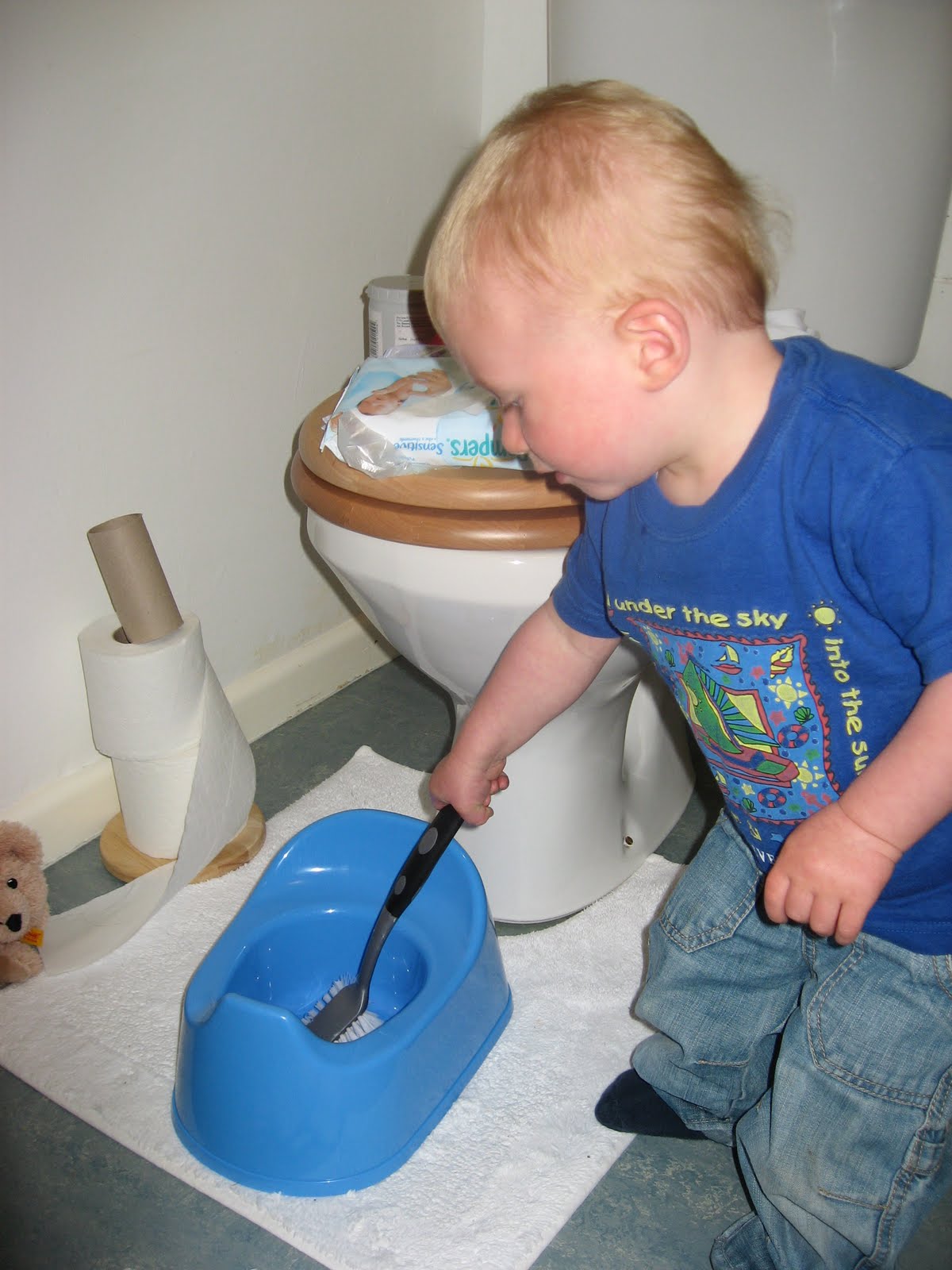
J happened to wee as I was changing his nappy on Sunday, so I slipped the potty underneath and made a bit of a fuss at how great it was that he was using the potty. I then showed him how to empty it into the toilet and flush it away. He was very interested, especially in the flushing, and very pleased with himself.

I read in something about potty training that there's no need to go over the top with praise. I think I was a wee bit enthusiastic (pardon the pun) with my high 5s. But he did know that it was a "good thing" by the end of the episode.

In case you're interested, I got a mega cheap potty a few weeks ago and so far it has been a hat (J loves it on my head...) and a seat for J and for teddy.


Now he knows the connection with wee.

We're not potty training per se, but I read somewhere about having a potty around and getting children interested in it before training.

PS - I know I've cleaned it thoroughly, but I'm now a bit less willing to wear it as a hat...   :-)

Cast number 6

J had cast number 6 today. As soon as we walked into the casting room and were greeted by Patrick the plasterer, J stopped smiling, turned round and ran out! He isn't daft and knows what's coming - but didn't mind too much with having it put on again. He was much more restless than last time though and it took 4 of us to keep him still. But he didn't protest, it was more just being wriggly.

Starting with the evening before- big smiles when the scissors come out:

 Peppa pig was far more interesting than mummy wanting to take photos
J keeps stroking his chest and belly when the cast comes off - must be nice to feel it when it's been covered up for 2 weeks. I have a lovely video clip of this, but it won't upload. 


His skin is fine - bit red in patches, but no problems at all.  
 We went out to water the flowers before J's bath. I love his new all in one kagoule and George pig boots (his choice of wellies - I put the whole range in front of him at the shop, and he definitely wanted these - I thought he'd go for the crocodiles, but was wrong! I love it when he makes choices and I see the real character of my son emerging :-)  ).
 J was fascinated by this tap at the Hospital - it has a sensor and he loved playing with it (and pre-casting I don't mind playing with water).

 As ever, J had his traditional sausage and beans afterwards. Nice to have a little ritual.

I must admit that even though all went well and we both know the ropes well now, I felt drained again afterwards... not helped by being woken up at least hourly overnight (J's incisors seem to be the problem at the moment). Hopefully we'll both get a good night's sleep tonight. Next cast on the 27th, then the consultant and more x-rays on 10th October. Fingers crossed for a clear improvement.

Monday, 12 September 2011

effect of scoliosis in later life

I am trying to find out what effect a residual curve will have in later life.

It was suggested when J was last cast that we might expect him to have a curve in the 20*s even after casting. He will be fitted for a brace after the series of casts he's currently having, but that will be just to maintain whatever he's got rather than correct it. It was not a consultant who said this though - so it is another question for the 10th October when we do get to see a consultant and have more x-rays.

I need to know whether or not to push for a different treatment - eg EDF (the Mehta cast treatment with proper traction applied while the child is on a frame, not just a squeeze on the soft cast).

I had hoped to go to the Oxford conference last week to get answers (see earlier post from the end of July). I may post separately about them saying at the last minute (after me contacting them, not them contacting me) that it was "deemed inappropriate for members of the public" and that "this meeting involves discussion by highly trained specialists from around the world on a very complex and demanding field".

My feelings on all of that and the email exchange are long enough to be worthy of a separate post! If you don't have information, it's hard to know what questions to ask - yet it is my responsibility as a parent to be proactive in J's treatment and push for a second opinion or alternative treatment. I may not be a consultant, but Cambridge don't have a bad reputation. Enough.

Returning to the effect in later life, I started this post with the intention of saying that I have found a website about backpain today which had a relevant query and consultant's response: http://www.backcare.org.uk/779-1655/Scoliosis.html 

In short, the adult who submitted the query because of intense backpain had had scoliosis as a child (before he was 11) and had been told it was cured. The consultant replied wondering what kind of scoliosis it was (congenital or idiopathic) and went on to write:

Either way, if the curve is not too bad then she could lead a normal life with little if any restriction. However in late middle age, when wear and tear changes set in and the repair mechanisms in the body become less vigorous, then pain may develop and the curvature may increase a little perhaps unbalancing the spine.

At that stage a good therapist is often helpful with massage, deep heat, specific exercises, manipulation, shoe raise, spinal support etc as appropriate. If still bad then a spinal or pain specialist may help. The first essential is to define as clearly as possible the source of the pain, which may be muscle, ligament, facet joint, disc or nerve root and treat accordingly with injections, radio-frequency etc.

Occasionally if all else fails, life is intolerable and the pain source can be determined with some confidence, then well directed surgery with stabilisation or relief of nerve pressure can be valuable.

Chronic pain management will help you to understand the nature of the pain and to live with it with some compromises but a minimum of disability. If you can become more active then the repair processes might be stimulated sufficiently to ease the pain."


The key sentence for me is: However in late middle age, when wear and tear changes set in and the repair mechanisms in the body become less vigorous, then pain may develop and the curvature may increase a little perhaps unbalancing the spine.

However "small" the residual curve, the unbalancing may produce pain in later life. They say that below 10* is normal and not deemed to be scoliosis. Ok. But 20*+? Even if it's not progressive at this stage (and they have indicated that they think it is of the resolving type, not the progressive type), it may not resolve to less than 10*. Would Mehta casting with EDF produce a better angle? Is it, in any case, worth getting the opinion of someone trained in the alternative method? (there is a consultant in Oxford who does this type of casting I have found out, plus the ones I knew about in Liverpool and Middlesex).

I would like to know what effect the growth spurt during puberty has on a residual curve too - if there's a weakness, then won't it exaggerate that? (that seems logical and is what other parents have been told by doctors on the message boards I'm on, but their children have progressive scoliosis that is being treated by Mehta (down to less than 10* in quite a few cases!), so I don't know whether it applies in J's case).  

I will be building up my questions for 10th October.

Thursday, 8 September 2011

happy holidays - 1

We had a lovely time near Woolacombe, North Devon. I relished every moment of not having the cast :-)

J played on the beach, paddled in the sea, went swimming in a funky swimming pool (with rapids, slides, underwater geysers etc), had baths every day... wonderful.

I haven't time to finish this blog in one go - but here are some beach photos. I love the video at the end - J found great delight in destroying any sandcastle that we built :-)


 Playing ball (or rather running away from mummy carrying the ball!)


 Spinning round - J LOVES doing this


 Removal of the cast (our first trip to the beach was made with the cast, knowing we could take it off later) - always a moment I love. And J is always so patient - he knows what is happening and waits very still.


 Bathtime. Wonderful to play with all those toys again :-)
 Back to the beach


 J consumed a lot of sand while eating snacks. Didn't seem in the slightest bit bothered!


 My favourite photo out of all of these. One happy little boy :-)

 This is great - DESTROY!!!

long time no see!

Before you ask, no we haven't been on holiday all this time!

We had a lovely time at the seaside - more of that anon - and J had his 6th cast fitted the Tuesday after we got back.

I must admit that the re-casting really affected me this time. I felt quite down knowing that this will go on and on for years yet. I've picked myself up and given myself a talking-to since then. Severe lack of sleep while on holiday had taken its toll. One night I got just 2 hours and other nights were not much better. I hate sharing a room with J as he makes a lot of noise at night even when he's asleep and doesn't need me at all. Sleep has been better for the past few days - however, if I wake up after 3am or so (now it's often not J's fault) I don't get back to sleep and that's a problem.

J was fine about getting the cast again. He protested a little about the towelling jersey, but then stood as good as gold throughout (with his legs crossed- don't know why!) and looked at the pictures on the walls. The plasterer was going to offer a lollipop at the end, but I took J for our traditional post-casting sausage instead (this time with a bowl of baked beans). He had started to be reluctant about walking down the corridor out of the casting room, but a mention of the sausage spurred him on.

The pictures below are the only ones from the casting - what a cheeky face, eh? He's recently learnt to stick out his tongue, and keeps on and on doing it :-) No sign of the tongue tie he had at birth (it was only slight anyway). And obviously not in the least bit bothered by the new cast!