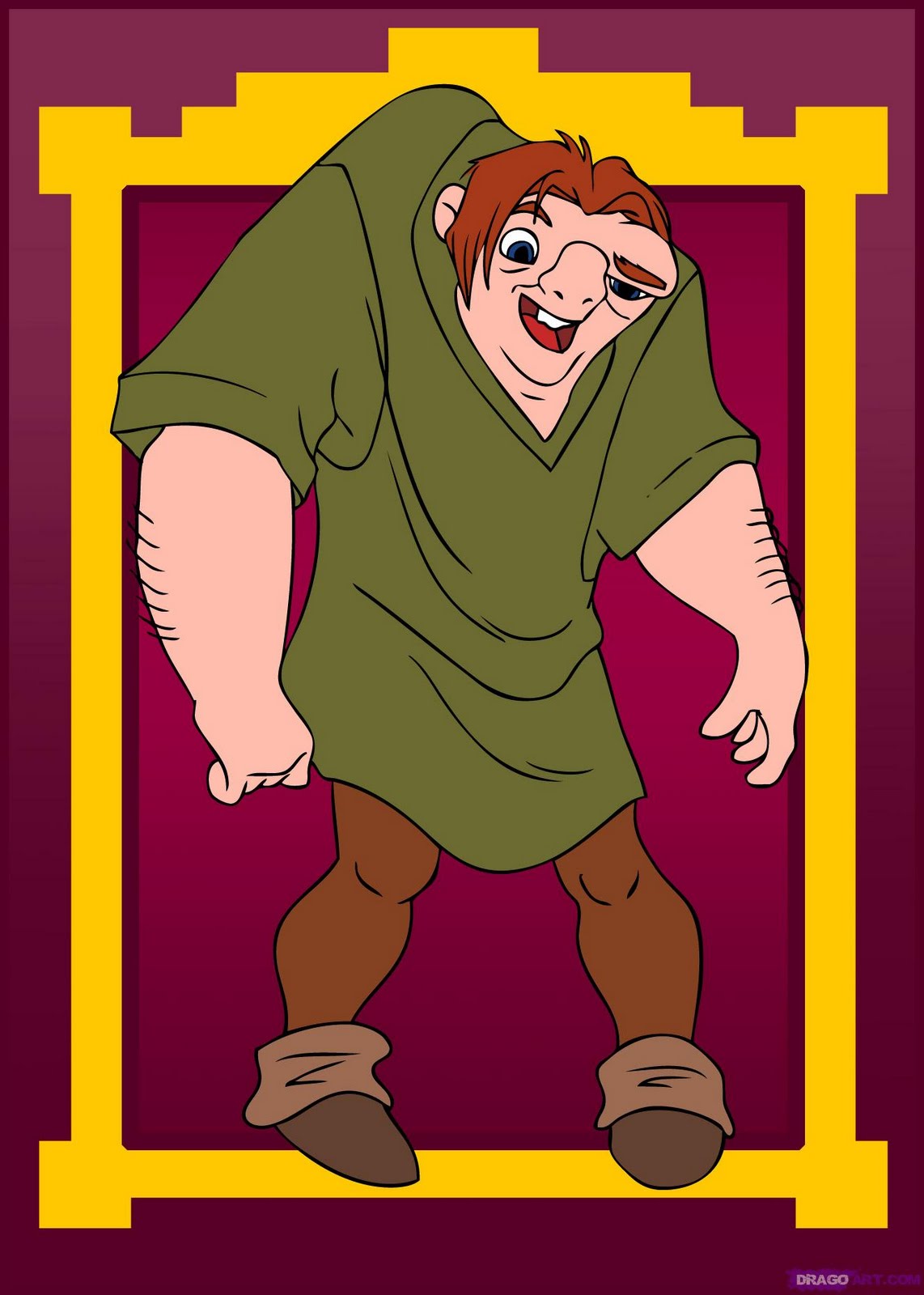
J happened to wee as I was changing his nappy on Sunday, so I slipped the potty underneath and made a bit of a fuss at how great it was that he was using the potty. I then showed him how to empty it into the toilet and flush it away. He was very interested, especially in the flushing, and very pleased with himself.
I read in something about potty training that there's no need to go over the top with praise. I think I was a wee bit enthusiastic (pardon the pun) with my high 5s. But he did know that it was a "good thing" by the end of the episode.
In case you're interested, I got a mega cheap potty a few weeks ago and so far it has been a hat (J loves it on my head...) and a seat for J and for teddy.
Now he knows the connection with wee.
We're not potty training per se, but I read somewhere about having a potty around and getting children interested in it before training.
PS - I know I've cleaned it thoroughly, but I'm now a bit less willing to wear it as a hat... :-)
Tuesday, 13 September 2011
Cast number 6
J had cast number 6 today. As soon as we walked into the casting room and were greeted by Patrick the plasterer, J stopped smiling, turned round and ran out! He isn't daft and knows what's coming - but didn't mind too much with having it put on again. He was much more restless than last time though and it took 4 of us to keep him still. But he didn't protest, it was more just being wriggly.
Starting with the evening before- big smiles when the scissors come out:
Peppa pig was far more interesting than mummy wanting to take photos
His skin is fine - bit red in patches, but no problems at all.
We went out to water the flowers before J's bath. I love his new all in one kagoule and George pig boots (his choice of wellies - I put the whole range in front of him at the shop, and he definitely wanted these - I thought he'd go for the crocodiles, but was wrong! I love it when he makes choices and I see the real character of my son emerging :-) ).
J was fascinated by this tap at the Hospital - it has a sensor and he loved playing with it (and pre-casting I don't mind playing with water).
As ever, J had his traditional sausage and beans afterwards. Nice to have a little ritual.
Starting with the evening before- big smiles when the scissors come out:
Peppa pig was far more interesting than mummy wanting to take photos
J keeps stroking his chest and belly when the cast comes off - must be nice to feel it when it's been covered up for 2 weeks. I have a lovely video clip of this, but it won't upload.
His skin is fine - bit red in patches, but no problems at all.
We went out to water the flowers before J's bath. I love his new all in one kagoule and George pig boots (his choice of wellies - I put the whole range in front of him at the shop, and he definitely wanted these - I thought he'd go for the crocodiles, but was wrong! I love it when he makes choices and I see the real character of my son emerging :-) ).
J was fascinated by this tap at the Hospital - it has a sensor and he loved playing with it (and pre-casting I don't mind playing with water).
As ever, J had his traditional sausage and beans afterwards. Nice to have a little ritual.
I must admit that even though all went well and we both know the ropes well now, I felt drained again afterwards... not helped by being woken up at least hourly overnight (J's incisors seem to be the problem at the moment). Hopefully we'll both get a good night's sleep tonight. Next cast on the 27th, then the consultant and more x-rays on 10th October. Fingers crossed for a clear improvement.
Monday, 12 September 2011
effect of scoliosis in later life
I am trying to find out what effect a residual curve will have in later life.
It was suggested when J was last cast that we might expect him to have a curve in the 20*s even after casting. He will be fitted for a brace after the series of casts he's currently having, but that will be just to maintain whatever he's got rather than correct it. It was not a consultant who said this though - so it is another question for the 10th October when we do get to see a consultant and have more x-rays.
I need to know whether or not to push for a different treatment - eg EDF (the Mehta cast treatment with proper traction applied while the child is on a frame, not just a squeeze on the soft cast).
I had hoped to go to the Oxford conference last week to get answers (see earlier post from the end of July). I may post separately about them saying at the last minute (after me contacting them, not them contacting me) that it was "deemed inappropriate for members of the public" and that "this meeting involves discussion by highly trained specialists from around the world on a very complex and demanding field".
My feelings on all of that and the email exchange are long enough to be worthy of a separate post! If you don't have information, it's hard to know what questions to ask - yet it is my responsibility as a parent to be proactive in J's treatment and push for a second opinion or alternative treatment. I may not be a consultant, but Cambridge don't have a bad reputation. Enough.
Returning to the effect in later life, I started this post with the intention of saying that I have found a website about backpain today which had a relevant query and consultant's response: http://www.backcare.org.uk/779-1655/Scoliosis.html
In short, the adult who submitted the query because of intense backpain had had scoliosis as a child (before he was 11) and had been told it was cured. The consultant replied wondering what kind of scoliosis it was (congenital or idiopathic) and went on to write:
The key sentence for me is: However in late middle age, when wear and tear changes set in and the repair mechanisms in the body become less vigorous, then pain may develop and the curvature may increase a little perhaps unbalancing the spine.
However "small" the residual curve, the unbalancing may produce pain in later life. They say that below 10* is normal and not deemed to be scoliosis. Ok. But 20*+? Even if it's not progressive at this stage (and they have indicated that they think it is of the resolving type, not the progressive type), it may not resolve to less than 10*. Would Mehta casting with EDF produce a better angle? Is it, in any case, worth getting the opinion of someone trained in the alternative method? (there is a consultant in Oxford who does this type of casting I have found out, plus the ones I knew about in Liverpool and Middlesex).
I would like to know what effect the growth spurt during puberty has on a residual curve too - if there's a weakness, then won't it exaggerate that? (that seems logical and is what other parents have been told by doctors on the message boards I'm on, but their children have progressive scoliosis that is being treated by Mehta (down to less than 10* in quite a few cases!), so I don't know whether it applies in J's case).
I will be building up my questions for 10th October.
It was suggested when J was last cast that we might expect him to have a curve in the 20*s even after casting. He will be fitted for a brace after the series of casts he's currently having, but that will be just to maintain whatever he's got rather than correct it. It was not a consultant who said this though - so it is another question for the 10th October when we do get to see a consultant and have more x-rays.
I need to know whether or not to push for a different treatment - eg EDF (the Mehta cast treatment with proper traction applied while the child is on a frame, not just a squeeze on the soft cast).
I had hoped to go to the Oxford conference last week to get answers (see earlier post from the end of July). I may post separately about them saying at the last minute (after me contacting them, not them contacting me) that it was "deemed inappropriate for members of the public" and that "this meeting involves discussion by highly trained specialists from around the world on a very complex and demanding field".
My feelings on all of that and the email exchange are long enough to be worthy of a separate post! If you don't have information, it's hard to know what questions to ask - yet it is my responsibility as a parent to be proactive in J's treatment and push for a second opinion or alternative treatment. I may not be a consultant, but Cambridge don't have a bad reputation. Enough.
Returning to the effect in later life, I started this post with the intention of saying that I have found a website about backpain today which had a relevant query and consultant's response: http://www.backcare.org.uk/779-1655/Scoliosis.html
In short, the adult who submitted the query because of intense backpain had had scoliosis as a child (before he was 11) and had been told it was cured. The consultant replied wondering what kind of scoliosis it was (congenital or idiopathic) and went on to write:
Either way, if the curve is not too bad then she could lead a normal life with little if any restriction. However in late middle age, when wear and tear changes set in and the repair mechanisms in the body become less vigorous, then pain may develop and the curvature may increase a little perhaps unbalancing the spine.
At that stage a good therapist is often helpful with massage, deep heat, specific exercises, manipulation, shoe raise, spinal support etc as appropriate. If still bad then a spinal or pain specialist may help. The first essential is to define as clearly as possible the source of the pain, which may be muscle, ligament, facet joint, disc or nerve root and treat accordingly with injections, radio-frequency etc.
Occasionally if all else fails, life is intolerable and the pain source can be determined with some confidence, then well directed surgery with stabilisation or relief of nerve pressure can be valuable.
Chronic pain management will help you to understand the nature of the pain and to live with it with some compromises but a minimum of disability. If you can become more active then the repair processes might be stimulated sufficiently to ease the pain."
The key sentence for me is: However in late middle age, when wear and tear changes set in and the repair mechanisms in the body become less vigorous, then pain may develop and the curvature may increase a little perhaps unbalancing the spine.
However "small" the residual curve, the unbalancing may produce pain in later life. They say that below 10* is normal and not deemed to be scoliosis. Ok. But 20*+? Even if it's not progressive at this stage (and they have indicated that they think it is of the resolving type, not the progressive type), it may not resolve to less than 10*. Would Mehta casting with EDF produce a better angle? Is it, in any case, worth getting the opinion of someone trained in the alternative method? (there is a consultant in Oxford who does this type of casting I have found out, plus the ones I knew about in Liverpool and Middlesex).
I would like to know what effect the growth spurt during puberty has on a residual curve too - if there's a weakness, then won't it exaggerate that? (that seems logical and is what other parents have been told by doctors on the message boards I'm on, but their children have progressive scoliosis that is being treated by Mehta (down to less than 10* in quite a few cases!), so I don't know whether it applies in J's case).
I will be building up my questions for 10th October.
Thursday, 8 September 2011
happy holidays - 1
We had a lovely time near Woolacombe, North Devon. I relished every moment of not having the cast :-)
J played on the beach, paddled in the sea, went swimming in a funky swimming pool (with rapids, slides, underwater geysers etc), had baths every day... wonderful.
I haven't time to finish this blog in one go - but here are some beach photos. I love the video at the end - J found great delight in destroying any sandcastle that we built :-)
Playing ball (or rather running away from mummy carrying the ball!)
Spinning round - J LOVES doing this
Removal of the cast (our first trip to the beach was made with the cast, knowing we could take it off later) - always a moment I love. And J is always so patient - he knows what is happening and waits very still.
Bathtime. Wonderful to play with all those toys again :-)
Back to the beach
J consumed a lot of sand while eating snacks. Didn't seem in the slightest bit bothered!
My favourite photo out of all of these. One happy little boy :-)
This is great - DESTROY!!!
long time no see!
Before you ask, no we haven't been on holiday all this time!
We had a lovely time at the seaside - more of that anon - and J had his 6th cast fitted the Tuesday after we got back.
I must admit that the re-casting really affected me this time. I felt quite down knowing that this will go on and on for years yet. I've picked myself up and given myself a talking-to since then. Severe lack of sleep while on holiday had taken its toll. One night I got just 2 hours and other nights were not much better. I hate sharing a room with J as he makes a lot of noise at night even when he's asleep and doesn't need me at all. Sleep has been better for the past few days - however, if I wake up after 3am or so (now it's often not J's fault) I don't get back to sleep and that's a problem.
J was fine about getting the cast again. He protested a little about the towelling jersey, but then stood as good as gold throughout (with his legs crossed- don't know why!) and looked at the pictures on the walls. The plasterer was going to offer a lollipop at the end, but I took J for our traditional post-casting sausage instead (this time with a bowl of baked beans). He had started to be reluctant about walking down the corridor out of the casting room, but a mention of the sausage spurred him on.
The pictures below are the only ones from the casting - what a cheeky face, eh? He's recently learnt to stick out his tongue, and keeps on and on doing it :-) No sign of the tongue tie he had at birth (it was only slight anyway). And obviously not in the least bit bothered by the new cast!
Thursday, 18 August 2011
Cast free for a week :-)
Yippee!
J is allowed to be cast free for a whole week when we go on holiday to the beach :-)
It'll be fantastic to enjoy baths, swims, playing in the sand and **HUGS**
I've gone out and bought J a bucket, spade and mini watering can to celebrate - he's been wandering round the house with them looking very proud of himself.
Wednesday, 17 August 2011
New blog!
I have decided to set up a new blog: http://moreofmummysmusings.blogspot.com/
My intention in setting up the new blog is to have a space to:
- Think about parenting
- Record our family life in all its richness
- Reflect on life in general
- "Keep" the quirky things that are so easily lost, but which brighten up the day
Thursday, 4 August 2011
A question of language
When you're used to the relatively Politically Correct world in which we now live, it can be quite shocking when you hear some of the medical terminology.
The letter from the hospital, for example, stated that my son had an appointment with the "Spinal Deformity Team".
Deformity. What a word!
de·for·mi·ty
1. The state of being deformed.
2. A bodily malformation, distortion, or disfigurement.
3. A deformed person or thing.
4. Gross ugliness or distortion.
5. (Medicine / Pathology) Pathol an acquired or congenital distortion of an organ or part
6. (Psychology) a defect, esp of the mind or morals; depravity
I can see why they say that - it distinguishes his case from Spinal Surgery or Vertebral Trauma - but it's quite stark.
It also has such negative connotations in many walks of life. The definitions above point to "ugliness" and "depravity". It conjures up images of Hunchback of Notre Dame (now if only they'd had casting in his day!!) and we all know that he was actually a real sweetie once you got to know him (well, according to Disney anyway!).
I used to work at an organisation called L'Arche with people who had special needs - some of whom couldn't walk, talk or eat by themselves and needed 24/7 care whereas others were fairly independent. There are 137 L'Arche communities in over 40 countries worldwide and as well as day-to-day personal care within the house where I lived, I was involved in translating and interpreting (I speak French, German and Spanish), for example at their international meetings, and so was acutely aware of the question of language.
The terminology has changed a huge amount over the years and is different in different countries (even among the English-speaking ones) which means you might use the "wrong" phrase even if you have the best of intentions.
I noticed recently that on the L'Arche UK website they now say "people with learning disabilities" whereas on the L'Arche International website they use "people with intellectual disabilities" or "people with a developmental disability". When L'Arche was first founded by Jean Vanier in the 1960's they still used terms such as "retarded" and later on "mental handicap". All such powerful and emotive terms.
The key to it all is, I think, respect for the person we are referring to. It's important to keep in mind they are a person not a condition (not using "the disabled" for example).
Of course, many of the medical terms are written in Greek or Latin which obscures their meaning for most of us - yet often the terms are extremely literal. The derivation of orthopaedics and scoliosis is a case in point:
Orthopaedics
According to Wikipedia, "Nicholas Andry coined the word "orthopaedics", derived from Greek words for orthos ("correct", "straight") and paideion ("child"), when he published Orthopaedia: or the Art of Correcting and Preventing Deformities in Children in 1741. Correction of spinal and bony deformities became the cornerstone of orthopaedic practice."
Scoliosis
Scoliosis is derived from the Greek word skolios meaning "crooked" - a very literal description of the curved or S-shaped spine it refers to in medicine!
On reflection, I don't really object to the use of the term 'spinal deformity' as it describes my son's condition. But I think those in the medical profession need the occasional (well-phrased!) reminder to prevent them becoming immune to how powerful such language can be!
The letter from the hospital, for example, stated that my son had an appointment with the "Spinal Deformity Team".
Deformity. What a word!
de·for·mi·ty
1. The state of being deformed.
2. A bodily malformation, distortion, or disfigurement.
3. A deformed person or thing.
4. Gross ugliness or distortion.
5. (Medicine / Pathology) Pathol an acquired or congenital distortion of an organ or part
6. (Psychology) a defect, esp of the mind or morals; depravity
I can see why they say that - it distinguishes his case from Spinal Surgery or Vertebral Trauma - but it's quite stark.
It also has such negative connotations in many walks of life. The definitions above point to "ugliness" and "depravity". It conjures up images of Hunchback of Notre Dame (now if only they'd had casting in his day!!) and we all know that he was actually a real sweetie once you got to know him (well, according to Disney anyway!).
I used to work at an organisation called L'Arche with people who had special needs - some of whom couldn't walk, talk or eat by themselves and needed 24/7 care whereas others were fairly independent. There are 137 L'Arche communities in over 40 countries worldwide and as well as day-to-day personal care within the house where I lived, I was involved in translating and interpreting (I speak French, German and Spanish), for example at their international meetings, and so was acutely aware of the question of language.
The terminology has changed a huge amount over the years and is different in different countries (even among the English-speaking ones) which means you might use the "wrong" phrase even if you have the best of intentions.
I noticed recently that on the L'Arche UK website they now say "people with learning disabilities" whereas on the L'Arche International website they use "people with intellectual disabilities" or "people with a developmental disability". When L'Arche was first founded by Jean Vanier in the 1960's they still used terms such as "retarded" and later on "mental handicap". All such powerful and emotive terms.
The key to it all is, I think, respect for the person we are referring to. It's important to keep in mind they are a person not a condition (not using "the disabled" for example).
Of course, many of the medical terms are written in Greek or Latin which obscures their meaning for most of us - yet often the terms are extremely literal. The derivation of orthopaedics and scoliosis is a case in point:
Orthopaedics
According to Wikipedia, "Nicholas Andry coined the word "orthopaedics", derived from Greek words for orthos ("correct", "straight") and paideion ("child"), when he published Orthopaedia: or the Art of Correcting and Preventing Deformities in Children in 1741. Correction of spinal and bony deformities became the cornerstone of orthopaedic practice."
Scoliosis
Scoliosis is derived from the Greek word skolios meaning "crooked" - a very literal description of the curved or S-shaped spine it refers to in medicine!
On reflection, I don't really object to the use of the term 'spinal deformity' as it describes my son's condition. But I think those in the medical profession need the occasional (well-phrased!) reminder to prevent them becoming immune to how powerful such language can be!
Wednesday, 3 August 2011
24 habits of highly annoying toddlers (who, of course, we love anyway)
If you have a toddler, or used to have a toddler, you may appreciate these "24 habits of highly annoying toddlers (who, of course, we love anyway)" (a great website written by Mike Shields)
For example:
Habit 8: Making the house look like insane people live in it
NB Some are not terribly PC, some are clearly US-based and they're not to do with scoliosis but hey... they made me laugh :-)
Habit 8: Making the house look like insane people live in it
Toys, magazines, and clothes are strewn all over the floor; the drawers and cabinets are all locked; and people in bathrobes and pajamas are often found walking back and forth moaning for coffee. Oh, and that “cleanup, cleanup, everybody, everywhere” song? We don’t sound crazy singing that at all.
Habit 9: Ruining nice/important/sentimentally irreplaceable things
Yes, that picture frame had been in the family for years, but I understand that you needed to satisfy your teething urge with a piece of precious silver. No, really.
Habit 12: Providing unintentional injuries
Hello to you, too! Next time, if you could do it without giving me a black eye, my coworkers won’t wonder if they should report Mommy to the authorities.
Habit 13: Providing intentional injuries
You know why I’m not going to bite you back? Because Mommy would kill me I’m the adult.
Habit 16: Really loving repetition
The first few times you pretended to eat that fake piece of fruit I bought you? Adorable. The 30th time? Um, nope. Oh, goody, we’re going to sing “The Wheels On The Bus” now!
Habit 17: Traveling heavy
Going on a trip to see the in-laws? That’s at least four bags! Going to the playground for a half-hour? That’s two!
Habit 18: Being inflexible
“Sure, we’d love to make plans this Saturday. Here’s the thing: Jacob usually naps from 12-2, so we can have brunch early or meet for a late-afternoon coffee. But he didn’t sleep well last night, so he may go down for his nap early, so we’ll have to call you right before we leave to let you know when we’ll get there. And of course we need to back on the road by 6:00 to get home for dinner and bedtime. Does that work for you? We’re also available on Sunday at 6:00 a.m.”
Subscribe to:
Posts (Atom)